

When Access to Care Changes a Stage 4 Cancer Story
When Options Feel Like They’re Running Out
For Nisar Hussain Khan, a diagnosis of Stage 4 lung cancer came with devastating news—there were few treatment options left.
He had already spent nearly two months in the hospital. He had lost so much weight he needed a feeding tube. Even speaking was difficult because of a severe cough.
His daughter, Kay, remembers how quickly everything changed.
“We were told there wasn’t much more they could do,” she shared.
For many families facing advanced lung cancer, this is the moment when time feels like it’s slipping away.
But for some patients, clinical trials for lung cancer can offer access to advanced Stage 4 lung cancer treatment options that are not available elsewhere.
A Turning Point Through Clinical Trials
Everything changed when Nisar and his family sought care at Memorial Sloan Kettering Cancer Center.
There, they were offered something many patients never get the chance to explore—a clinical trial for Stage 4 lung cancer.
Led by Robert Daly and connected to research from Alexander Drilon, the trial focused on a targeted therapy designed to block cancer growth at the molecular level.
Within days of starting treatment, everything began to shift.
“Three days after taking the medication, I was able to talk and laugh again.”
“After a week, the terrible cough was nearly gone. I have regained over 20 pounds. I can even play ping-pong. It was a miracle.”
Living Again—Without Leaving Home
For Nisar and his family, one of the biggest concerns was the burden of travel.
Like many patients with Stage 4 lung cancer, getting to a major cancer center can be physically exhausting, emotionally overwhelming, and financially difficult.
But this clinical trial offered something different.
Through a more innovative approach, his care was coordinated remotely—allowing him to receive treatment close to home in Texas.
“It was such a huge relief for us,” Kay said. “He could stay in his own space and sleep in his own bed.”
This kind of access is changing what’s possible for patients seeking clinical trials for lung cancer.
Another Stage 4 Lung Cancer Story
Tengo Shautidze was facing a different form of aggressive lung cancer when he was offered an innovative immunotherapy treatment.
Traditionally, this type of Stage 4 lung cancer treatment requires hospitalization due to potential side effects.
But through a new “hospital at home” approach led by Dr. Daly, Tengo was able to receive treatment from his own home—with telehealth monitoring, in-home visits, and support.
“Getting medicine this way is much more convenient… it’s easier on you and your family.”
“It’s also better psychologically — you don’t feel as sick.”
For Tengo and his wife, this approach made a meaningful difference—not just physically, but emotionally.
“My husband feels so much better,” his wife shared. “And is doing so much better.”
Why These Stage 4 Lung Cancer Stories Matter
Nisar and Tengo’s experiences highlight something critical:
For patients with Stage 4 lung cancer, the right treatment—and the right access—can change everything.
Clinical trials for lung cancer are not just research. They provide access to:
- Advanced targeted therapies and immunotherapy
- New Stage 4 lung cancer treatment options
- Opportunities when standard treatments no longer work
Yet only a small percentage of patients ever participate in clinical trials.
The Reality: Access Is Still the Biggest Barrier
Many patients are not missing options—they are missing access.
Delays in referrals, lack of awareness about clinical trials for lung cancer, and the burden of travel prevent patients from reaching the care that could extend their lives.
For patients with Stage 4 cancer, time is everything.
How Stage4Hope Helps Patients Move Faster
At Stage4Hope, we are focused on one mission:
Helping patients with Stage 4 cancer access life-saving care—faster.
We help patients:
- Connect with leading cancer centers
- Explore targeted therapy and clinical trial options
- Navigate complex treatment decisions
- Access travel support when distance is a barrier
👉 Learn more about how we support patients: https://stage4hope.org
If you or a loved one has been diagnosed with Stage 4 cancer, getting to the right place quickly can make all the difference.
👉 Explore resources and patient support: https://stage4hope.org/resources
Healthcare providers and partners can also refer patients directly to help accelerate access to care:
👉 Check out our travel grants: https://stage4hope.org
References:
https://www.mskcc.org/news/msk-clinical-trials-bringing-promise-of-new-medicine-to-more-patients

Stage 4 Cancer: What to Do First
Stage 4 Cancer: What to Do First After Diagnosis
A new cancer diagnosis can make everything feel urgent. Most people are frightened, overwhelmed, and pushed to make decisions before they even understand all their options.
But the earliest days after diagnosis are not just about moving fast. They are about making sure you do not lose options by moving too fast in the wrong direction.
Just Diagnosed with Advanced Cancer? 5 Things to Do Before Starting Treatment
Here are five of the most important things to do before starting treatment.
1. Slow things down and get the right testing first
Do not rush into treatment, especially chemotherapy, before the right information is back.
In many advanced cancers, biomarker testing can affect first line treatment decisions. NCI explains that biomarker testing looks for genes, proteins, and other substances that may help doctors choose treatment, and it can identify changes that affect how certain cancer treatments work.
Ask whether both tissue testing and, when appropriate, blood-based testing have been ordered. If those results could change your first treatment, they should be reviewed before you commit to a plan.
That means the first question should not be, “How fast can I start chemo?” It should be:
“Has my cancer been fully tested so I know all of my treatment options first?”
2. Do not choose first treatment until all options are discussed
The first treatment often matters the most because it can shape what options remain later.
Clinical trial eligibility commonly depends in part on prior treatment history, along with cancer type, stage, biomarkers, and overall health. In other words, the treatment you start first can affect what you may qualify for next.
Before deciding, ask your doctor to review all appropriate options, including:
- targeted therapy
- immunotherapy
- chemotherapy
- clinical trials
Do not let urgency push you into chemotherapy before you understand whether another option should be considered first.
3. Ask about clinical trials early, not as a last resort
Many patients think clinical trials are only for people who have run out of options. That is not true. Some trials are available for patients who are newly diagnosed or who have not yet started treatment.
Clinical trials matter because some of the newest cancer drugs are available there first.
Many phase 1 cancer trials, especially for patients with advanced cancer, are dose escalation studies in which participants receive the investigational treatment at different dose levels while researchers study safety and dosing. Patients often worry that joining a clinical trial means getting a placebo and no treatment. In cancer trials, that fear is often misunderstood. NCI says placebos are rarely used in cancer clinical trials and that giving a placebo is not ethical when an effective treatment is available.
A better question to ask is:
“Should a clinical trial be considered before I start standard treatment?”
4. Get treated at, or at minimum get a second opinion from, a major cancer center
Do not assume the first local referral is the best or only option.
NCI-Designated Cancer Centers are recognized for scientific leadership in laboratory and clinical research, and these centers often provide disease-specific expertise, broader access to clinical trials, and treatment approaches that smaller institutions may not offer.
This matters because a major cancer center may see treatment opportunities that a smaller local practice does not.
Even if you ultimately receive treatment locally, getting a second opinion from an NCI designated or other major cancer center can be one of the most important steps you take. Many insurance plans do cover major cancer centers, although referral rules, prior authorizations, and network requirements vary by plan and should be checked quickly.
5. Get support early so you can make clearer decisions
A cancer diagnosis affects far more than the body. It affects how you think, how you sleep, how you process information, and how you handle fear.
That is one reason support matters early. Patients often need space to steady themselves emotionally so they can make informed decisions medically.
At Stage4Hope, we understand that the earliest days after diagnosis can feel like the hardest. That is why we offer Strength for the Journey, our therapist-led virtual support designed specifically for people facing advanced cancer, including Still Me, our program for those who are newly diagnosed.
You do not need to have everything figured out immediately. But you do deserve the chance to make decisions from a place of clarity, not panic.
After a Stage 4 diagnosis, everything can feel urgent. But the goal is not simply to start treatment fast.
The goal is to make sure you start the right treatment first.
Need help taking the next step?
Learn how Stage4Hope helps patients access leading cancer centers and second opinions faster.
Explore our therapist-led virtual support programs for people newly diagnosed with advanced cancer.
Learn how second opinions can save lives.

How 2025 Changed Cancer Care
Real Progress for Advanced Cancer Patients
For people living with advanced or hard-to-treat cancer, progress is not just about science — it’s about more time, fewer side effects, and better quality of life. In 2025, doctors and researchers reported major treatment advances that are already changing how cancer is treated today. These developments are especially meaningful for patients with stage 4 cancer who may feel they are running out of options.
Many of these breakthroughs were led or supported by research teams at Memorial Sloan Kettering Cancer Center, and they reflect a growing shift toward personalized, less invasive, and more effective cancer care.
Below is what patients need to know — without the medical jargon.
Immunotherapy Alone Is Treating Some Cancers Successfully
One of the most hopeful advances of 2025 involves cancers with a genetic feature called mismatch repair deficiency (MMRd). This feature makes cancer cells easier for the immune system to recognize and destroy.
In a large clinical trial, nearly 80% of patients with MMRd cancers — including colorectal, stomach, esophageal, bladder, and other cancers — were successfully treated using immunotherapy alone. Many patients did not need surgery, chemotherapy, or radiation.
For patients, this matters deeply. Avoiding major surgery or harsh treatments can preserve organs, reduce long-term side effects, and protect quality of life. For people with advanced cancer, it also shows that less treatment can sometimes be more effective.
New Targeted Therapies Bring Hope for Lung Cancer
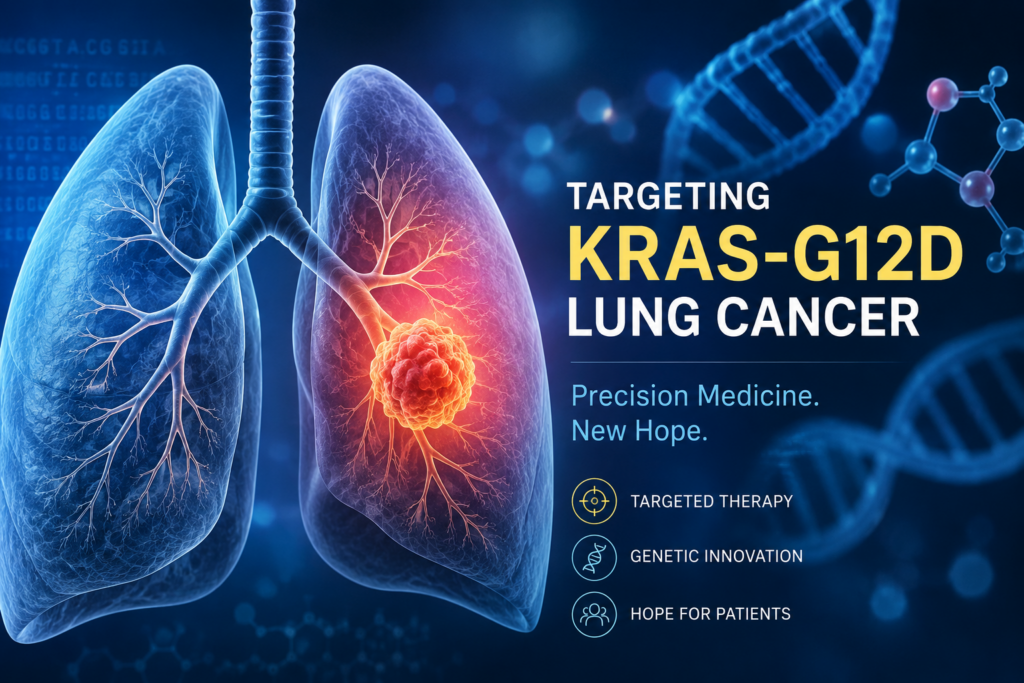
For people with non-small cell lung cancer, treatment options can become limited once chemotherapy or immunotherapy stop working. In 2025, researchers reported promising results from a new targeted therapy aimed at a mutation called KRAS-G12D — a mutation that until recently had no effective treatment.
In an early clinical trial, more than 60% of patients saw their tumors shrink, even though many had already tried multiple treatments without success. This is especially important for patients searching for new targeted therapy for lung cancer after being told there are no remaining options.
This breakthrough reinforces the importance of genetic testing, even later in the disease, because new drugs continue to emerge for specific cancer mutations.
Breast Cancer Patients Are Living Longer With New Combinations
Patients with advanced breast cancer also saw meaningful progress in 2025. A large clinical trial found that combining a new targeted therapy with standard hormone treatments helped patients live about 26% longer than with standard treatment alone.
This matters because many people with metastatic breast cancer stay on treatment for years. Extending survival while maintaining daily function and independence is a major win — and another reminder that treatment plans can evolve over time.
Blood Tests Help Prevent Cancer From Returning
Another important advance involves simple blood tests, often called liquid biopsies, that can detect tiny traces of cancer left behind after surgery.
In a small study, doctors used these blood tests to identify patients who were most likely to benefit from immunotherapy after surgery. Patients who received immunotherapy based on their blood test results had strong survival rates and lower chances of recurrence.
For patients living with the fear of cancer coming back, this approach represents a more personalized and proactive strategy — treating only when needed, and earlier than before.
Progress for Rare and Overlooked Cancers
Not all breakthroughs focus on common cancers. In 2025, several advances targeted rare and aggressive diseases that historically have had few options:
-
CAR T-cell therapy showed dramatic results for patients with AL amyloidosis who had stopped responding to standard treatments
-
A new targeted drug helped shrink tumors in patients with histiocytosis, a rare blood cancer affecting both adults and children
-
Children with an aggressive brain cancer lived far longer than expected using a new drug delivery method
For families facing rare diagnoses, these advances send a powerful message: research is not standing still.
Why This Matters for Stage 4 Patients
If you are living with stage 4 cancer, the message from 2025 is clear:
New options continue to emerge — even after standard treatments fail.
Across many cancer types, these advances mean:
-
More targeted therapies with fewer side effects
-
Immunotherapy replacing or delaying invasive treatments
-
Blood tests guiding smarter decisions
-
Clinical trials offering real benefit, not just future promise
At Stage4Hope, we encourage patients and caregivers to ask about genetic testing, clinical trials, and new treatment strategies, especially when options feel limited. Knowledge can open doors — and hope often begins with asking one more question. (Source: Memorial Sloan Kettering)
Read the complete article here >
You’re Not Alone—Connect with the Stage 4 Hope Community
Whether you’re exploring the latest cancer treatment advances like immunotherapy or targeted therapy, seeking emotional support, or trying to make sense of a new diagnosis, Stage 4 Hope is here for you. Join our community to access trusted resources, education, and encouragement from others who understand the stage 4 journey.
Read our blog about the New KRAS-G12D Lung Cancer Therapy Hope.

BLOCK-ID cancer research
BLOCK-ID: New Technique Finds Treatment Targets in Hard-to-Treat Cancers
When cancer is difficult to control, it’s often because the cancer cells have learned how to survive under intense stress. Even when their DNA is damaged or unstable — a situation that would normally cause a healthy cell to stop dividing or die — these cancer cells find ways to keep going.
This ability to survive under pressure is one reason some cancers become aggressive, resistant to treatment, or quick to return after therapy. Understanding how cancer cells manage this stress is a major focus of modern cancer research.
Researchers at Winship Cancer Institute of Emory University have now developed a powerful new research tool that helps explain how certain cancers adapt and survive under these extreme conditions. While this discovery is not a treatment yet, it offers important clues that may eventually lead to new targeted therapies for cancers that currently have limited options.
Why DNA copying matters in cancer
Every time a cell divides, it must make an exact copy of its DNA. In healthy cells, this process is carefully regulated to prevent mistakes. But in cancer cells, DNA copying often becomes chaotic.
DNA is copied at structures called replication forks, which are Y-shaped points where the DNA strands separate so new copies can be made. In many cancers, these replication forks frequently slow down, stall, or collapse. When this happens repeatedly, it creates DNA replication stress.
Replication stress is a double-edged sword. On one hand, it causes DNA damage and genetic instability — changes that can drive cancer growth and spread. On the other hand, cancer cells that learn how to survive replication stress gain a powerful advantage, allowing them to adapt, resist treatments, and continue dividing despite severe internal damage.
Many aggressive cancers exist in a constant state of replication stress. Understanding how they tolerate this stress — and which proteins help them survive it — is critical for finding new ways to disrupt cancer growth.
What is BLOCK-ID?
To better understand what happens when DNA is under stress or damage, researchers developed a new laboratory technique called BLOCK-ID, an Emory technique (short for biotinylation of lac operator array replication stress protein network identification).
In simpler terms, BLOCK-ID allows scientists to:
- Create stress in a cancer cell’s DNA on purpose.
- They then watch how cancer cells respond to that stress.
- This helps researchers see which proteins cancer cells use to survive.
This Emory technique solves a long-standing challenge in cancer research. Until now, it has been extremely difficult to identify which proteins are involved at replication forks during stress. BLOCK-ID provides a detailed and precise way to map the protein networks cancer cells rely on to survive.
A key discovery: TRIM24 and other proteins
Using BLOCK-ID, researchers identified multiple proteins that appear at stressed replication forks. One protein, called TRIM24, stood out as particularly important.
The team then applied this discovery to a specific cancer survival mechanism known as Alternative Lengthening of Telomeres (ALT).
Telomeres are protective caps at the ends of chromosomes. In normal cells, telomeres shorten each time a cell divides, which eventually limits how long a cell can continue reproducing. Cancer cells must overcome this limit to survive.
Some cancers — estimated at 10–15% — use the ALT pathway to maintain their telomeres without relying on the more common enzyme-based method. ALT is often seen in aggressive or difficult-to-treat cancers, including:
- Osteosarcoma
- Glioblastoma
- Pancreatic neuroendocrine tumors
The research showed that TRIM24 helps cancer cells protect their chromosome ends so they can keep dividing.
Why this is hopeful: four potential treatment targets
In addition to TRIM24, the researchers identified three other proteins involved in the ALT pathway. Together, these findings highlight four potential treatment targets in ALT-driven cancers.
Identifying targets is one of the most important early steps in cancer drug development. While it can take time to move from discovery to therapy, knowing which proteins are essential to cancer survival gives researchers a clearer path forward.
The next phase of research will focus on determining whether these targets can be safely disrupted — and whether doing so can slow or stop cancer growth.
What this could mean for patients
BLOCK-ID is not a new treatment, but it represents meaningful progress in understanding cancer biology. Research like this helps explain why some cancers behave aggressively and why they may stop responding to standard treatments.
For patients living with advanced or hard-to-treat cancers, this work supports a growing shift toward precision oncology — matching treatment strategies to the specific biological features of a tumor. Discoveries like this strengthen the importance of:
- Testing the cancer to learn what makes it grow
- Understanding how the cancer survives
- Looking into clinical trials when needed
As researchers uncover new weaknesses in cancer cells, new treatment options may become possible, even for patients who have been told there are few options left.
You’re Not Alone—Connect with the Stage 4 Hope Community
Whether you’re navigating treatment options, looking for emotional support, or trying to keep up with promising research, Stage 4 Hope is here for you. Join our community to stay connected to trusted resources, new updates, online training, and encouragement from others who understand this journey.
Learn about a new breakthrough: Cancer vaccines offer new hope.
References:
https://winshipcancer.emory.edu/newsroom/articles/2025/new-technique-identifies-potential-new-treatment-targets.php?
https://pubmed.ncbi.nlm.nih.gov/40614724/

Theranostics for Cancer
Theranostics: A Powerful Diagnostic Tool and Cancer Treatment in One
Radiation therapy has been used to fight cancer for more than a century. But when cancer has spread to multiple areas of the body, traditional radiation can be limited—because it’s usually aimed at one location at a time and can affect healthy tissue nearby. Memorial Sloan Kettering (MSK) highlights a newer approach that is changing what’s possible for advanced and metastatic cancers: theranostics.
What Is Theranostics?
Theranostics combines the words therapy and diagnostics. It’s a treatment strategy that uses radioactive medicines to first find cancer cells and then treat them—using the same target. MSK’s theranostics motto captures the concept simply: “We see what we treat, and we treat what we see.”
How Theranostics Works
Theranostics typically happens in two steps:
- Find the cancer (“see it”)
Doctors infuse a patient with a radioactive drug containing a diagnostic isotope that binds to a specific target on cancer cells. Then a PET scan “lights up” where the drug has attached, revealing cancer sites that may be hard to see on standard imaging. - Treat the cancer (“treat it”)
If the target is confirmed, doctors give a treatment version of the same approach—this time loaded with a therapeutic isotope. The radiation works like a highly precise “smart bomb,” damaging cancer cell DNA while helping protect surrounding healthy tissue.
Why Theranostics Is Such a Big Deal
MSK notes several practical advantages of theranostics, especially for cancers that have spread:
- It can reveal the exact location of cancer cells that might be missed on conventional scans.
- It can help doctors evaluate whether treatment is working sooner.
- It can help clinical trials move more efficiently from imaging to treatment phases.
- It can treat multiple sites of disease throughout the body, not just one spot at a time.
- Even when it isn’t a cure, theranostics can be meaningful because it may offer effective control with good tolerability—supporting quality of life and daily living for many patients.
A Real Example: Theranostics for Metastatic Prostate Cancer (Pluvicto)
MSK shares the story of a patient with metastatic (stage 4) prostate cancer who joined a clinical trial using lutetium-177 PSMA-targeted therapy (Pluvicto). The treatment targets PSMA, a protein on prostate cancer cells, delivering radiation directly to those cells.
MSK also notes that the FDA approval expanded in 2025 to include more patients—specifically, people who had not yet received chemotherapy, increasing who may be eligible for this type of treatment.
Theranostics Beyond Prostate Cancer
Theranostics is also being developed for other cancers. MSK describes ongoing work to identify new targets, including efforts in neuroendocrine cancers and research into targets like DLL3. MSK researchers are also working toward theranostics applications in cancers such as breast cancer, brain tumors, melanoma, and pancreatic cancer.
What’s Next: A More Powerful Next Wave (Alpha Particles)
MSK highlights a “next wave” of theranostics using alpha-emitting radiopharmaceuticals—described as the most powerful form yet—and notes they opened a facility dedicated to producing these agents for clinical trials.
Questions to Ask Your Care Team
If you or a loved one is living with advanced cancer, you might consider asking:
- Do I have a target (biomarker) that could make me eligible for theranostics?
- Would a PET scan help identify targets or sites of disease more clearly?
- Are there clinical trials involving targeted radionuclide therapy that fit my diagnosis?
- What side effects are typical, and how might this compare to other options?
(This is informational only—your oncology team can help you understand what’s appropriate for your specific diagnosis.)
You’re Not Alone—Connect with the Stage 4 Hope Community
Whether you’re exploring treatment options, seeking emotional support, or trying to make sense of a new diagnosis, Stage 4 Hope is here for you. Join our community to access trusted resources, education, and encouragement from others who understand the stage 4 journey.
Reference:
https://www.mskcc.org/news/theranostics-powerful-diagnostic-tool-and-cancer-treatment-in-one

Safer Cancer Drug Dosing Ahead
Safer Cancer Drug Dosing: ASCO and FDA Push for Optimal, Not Maximum, Doses
ASCO and the FDA promote safer cancer drug dosing by focusing on optimal cancer drug dosing—finding the optimal effective dose to reduce side effects and improve treatment tolerance. Learn more in this article about optimal cancer drug dosing.
Concerns are growing that cancer drugs may be given at higher doses than patients actually need, leading to unnecessary side effects and treatment interruptions. The American Society of Clinical Oncology (ASCO), working with the FDA, has issued new principles urging a shift from the old “maximum tolerated dose” approach toward finding the “optimal effective dose.” This matters for newer treatments like immunotherapies and targeted therapies, where higher doses don’t always improve results but often increase harmful side effects. Patient surveys show many people with advanced cancers struggle with severe treatment side effects, and oncologists frequently lower doses early on to help patients stay on therapy.
To fix this, ASCO recommends designing trials that test multiple dosage levels, tailoring studies to real-world patients, and improving how patient-reported side effects are tracked. These steps align with the FDA’s Project Optimus, which is pushing for better drug dosing in cancer research. For patients, this shift offers hope for treatment that works just as well—or better—while being easier to tolerate, helping people with advanced cancer focus on living fully instead of fighting side effects. (Source: Oncology News Central)
Read the complete article here >
Earlier detection and better-tolerated treatment often go hand in hand. If you’re interested in what’s on the horizon for catching cancer sooner, read Future of Cancer Screening: Multi-Cancer Early Detection Brings New Hope.
You’re Not Alone—Connect with the Stage 4 Hope Community
Whether you’re navigating treatment options, seeking emotional support, or trying to make sense of a new diagnosis, Stage 4 Hope is here for you. Learn more about topics like optimal cancer drug dosing, dosing strategy guidance from ASCO and the FDA, trial design, and initiatives like the FDA’s Project Optimus—along with other aspects of living with late-stage cancer. Join our community to connect with others who understand your experience and gain access to resources, events, medical updates, and invitations to supportive virtual events.

Second Opinions Can Save Lives
Why Getting a Second Opinion for Cancer Can Save Your Life
Being told you have cancer is overwhelming, and it’s easy to feel pressured to start treatment right away. But getting a second opinion can make a huge difference—it may confirm the diagnosis, catch mistakes, or suggest new treatment options. For patients with stage 4 or hard-to-treat lung cancer, this extra step can open the door to advanced therapies and clinical trials not available everywhere.
Specialists at National Cancer Institute-designated centers look deeper than a single test. They review scans, biopsy slides, and genetic testing to match you with the best targeted therapy or immunotherapy. Many doctors welcome second opinions, and sometimes both teams can work together—giving you more support, not less.
Most importantly, a second opinion can give you peace of mind. Knowing your diagnosis and plan have been double-checked helps you move forward with confidence and focus on what matters most: your care and your life. (Source: Winship Magazine)
Read the complete article here >
You’re Not Alone—Connect with the Stage 4 Hope Community
Whether you’re navigating treatment options, seeking emotional support, or trying to make sense of a new diagnosis, Stage 4 Hope is here for you. Learn more about practical guidance that can shape treatment decisions, like getting a second opinion and working with specialists. Explore genetic testing and treatment options such as targeted therapy, immunotherapy, and clinical trials. Join our community to connect with others who understand your experience.
Learn about targeted therapies bring new hope to lung cancer

Lung Cancer in Nonsmokers
Lung Cancer in Nonsmokers: The Truth, the Science, and Stories of Hope
Lung cancer is often treated like a “smoker’s disease,” but that stereotype is outdated—and it’s hurting people. Many patients have never smoked, and women under 65 are now seeing higher incidence rates than men in some age groups. What’s behind these cases? Often, the answer is biology: genetic mutations that can drive lung cancer even without traditional risk factors.
In this post, we’ll cover what’s driving lung cancer in nonsmokers (including RET-positive lung cancer and EGFR mutations), why stigma matters, what genetic testing can uncover, and how real patients are finding hope through research, advocacy, and community.
The Truth About Lung Cancer: It’s Not Just a Smoker’s Disease1
Lung cancer still carries a painful stigma. Many patients report feeling blamed or judged—by friends, family, and even medical professionals—because people assume smoking caused their disease. But anyone with lungs can get lung cancer, and no one deserves to be blamed for a diagnosis.
That stigma can do real harm. It’s been associated with delayed care, higher rates of depression, and lower screening rates—despite the fact that screening can catch lung cancer earlier, when treatment is often more effective. Shifting the narrative matters: lung cancer is a health issue, not a moral failing.
Lung Cancer in Women and Nonsmokers: What to Know2
Lung cancer diagnoses are declining overall, but a growing number of cases are being found in people who don’t fit the “typical” image—especially younger women and nonsmokers.
One reason some cases are missed or delayed is misdiagnosis. Younger nonsmoking women are sometimes told symptoms are asthma, bronchitis, or allergies, which can cost precious time. If you feel something is wrong, trust yourself. Persistent symptoms deserve follow-up, regardless of age or smoking history.
What’s Driving Lung Cancer in Nonsmokers?3
For many nonsmokers, lung cancer is driven by genetic mutations—changes inside cancer cells that help tumors grow. These are not the same as inherited risk (though inherited factors can play a role). Instead, they’re often tumor biomarkers that guide treatment.
This is why genetic testing (also called biomarker testing or molecular testing) is so important—especially for people with advanced lung cancer. It helps doctors match a patient to targeted therapy, which may be more effective and sometimes better tolerated than standard approaches alone.
Understanding RET-Positive Lung Cancer
One mutation that can drive lung cancer in nonsmokers is a RET fusion. RET-positive lung cancer is more common in never-smokers and can occur in younger patients, including women. It also may not show up through routine screening, which makes awareness and appropriate testing even more important.
Why it matters: If a tumor is RET-positive, a patient may be eligible for targeted treatments designed specifically to block RET-driven cancer growth. That can change the entire treatment plan—and outcomes.
Takeaway: If you or a loved one is diagnosed with lung cancer—especially stage 4 or hard-to-treat disease—ask your care team about biomarker testing early.
(Source: American Cancer Society, Yale Medicine, J Clin Oncol)
Read the complete article here
EGFR and Other Mutations: Why Testing Can Change Everything5
Mutations like EGFR are also more common in women and are seen at higher rates in certain populations, including Asian women. These biomarkers can open the door to targeted therapies that are specifically designed for cancers driven by those mutations.
The bottom line: lung cancer treatment is becoming more personalized. But personalization starts with testing.
How Research Is Accelerating Answers: The Lung Cancer Genetics Study6
A powerful genetics study is bringing hope to people facing lung cancer—especially nonsmokers and those with rare mutations. The Lung Cancer Genetics Study is collecting patient genetic and clinical data to help researchers:
- identify patterns in lung cancer among nonsmokers
- accelerate discoveries for rare mutations
- support more personalized treatment approaches
As more people participate and more data becomes available, researchers can move faster—and patients benefit from better-informed care.
Lung Cancer in Non-Smokers: Survivor & Patient Stories
Scientific progress matters—but so do stories. Real people are living proof that the lung cancer narrative is bigger than stigma.
From Remission to Recurrence: Karen’s Stage 4 Lung Cancer Journey
Karen was diagnosed with lung cancer at 47—a healthy, never-smoker with no family history—and after surgery, chemo, and eight clear years of scans, her cancer returned and became stage 4. Strengthened by new breakthroughs in lung cancer research, she continues to live fully. Karen’s story is a reminder that advances in treatment are giving patients more options, more time, and more hope.
Stage 4 Lung Cancer Veteran: Xavier Fights for Awareness
Air Force veteran Xavier Sanders was diagnosed with stage 4 lung cancer despite never smoking. He’s raising awareness about burn pit exposure, early detection, and support for service members. He’s not just fighting for himself. Xavier is advocating for younger airmen who may not know what symptoms to watch for or how to get the right care.
What You Can Do: Advocate for Yourself or Someone You Love
If you’re concerned about symptoms or navigating a diagnosis, these steps can help:
- Don’t dismiss persistent symptoms—especially a cough that won’t go away, shortness of breath, chest pressure, or unexplained weight loss
- Ask about lung cancer screening if you’re eligible
- If diagnosed, request biomarker testing early (RET, EGFR, and other drivers)
- Ask your doctor about targeted therapy, immunotherapy, and clinical trials when appropriate
- Seek community—support improves coping, confidence, and follow-through with care
You’re Not Alone—Connect with the Stage 4 Hope Community
Whether you’re navigating treatment options, seeking emotional support, or trying to make sense of a new diagnosis, Stage 4 Hope is here for you. Learn more about topics like lung cancer in nonsmokers by joining our community. Connect with others who understand your experience and gain access to trusted resources, medical updates, and invitations to supportive virtual gatherings.
Learn more about a study that offers hope for women with lung cancer.
References:
- https://www.mskcc.org/news/understanding-stigma-lung-cancer
- https://www.mskcc.org/news/lung-cancer-in-women-and-nonsmokers-what-to-know-about-symptoms-diagnosis-and-treatment
- https://happylungsproject.org/lung-cancer-risk-factors-understanding-its-causes-and-prevention/

Innovations Bring Hope to Lung Patients
New Lung Cancer Innovations Offering Hope to Patients
At Memorial Sloan Kettering, cutting-edge lung cancer care is changing lives—especially for those with advanced disease. Take Jen Cosgrove, a mother diagnosed with stage 4 lung cancer that had spread. Thanks to precise testing, doctors found her tumor had an ALK gene mutation, which responds well to targeted therapy called alectinib. Jen saw dramatic improvements within days and has been able to share important milestones with her children she once feared missing. MSK’s expert care, innovative treatments, and thorough diagnostics give patients like Jen hope and more time with their loved ones.
New Discoveries in Lung Cancer Detection
MSK researchers are also uncovering new types of lung cancer and better ways to detect it early. For example, they identified a rare form called atypical small cell lung carcinoma in younger patients who never smoked. Early detection remains critical, and MSK is developing noninvasive tools like the “E-nose,” a device that detects cancer-related chemicals in breath, which could make screening easier and less stressful. Lab studies on lung stem cells and tumor growth help scientists understand how cancer starts and grows, leading to better treatments. For patients facing lung cancer, these advances mean earlier diagnosis, more personalized care, and brighter hope for the future. (Source: Memorial Sloan Kettering)
Read the complete article here >
Learn how genetics study brings lung cancer hope.
Resources for Living With Stage 4 Cancer
Learn more about topics like lung cancer innovations. Become a member of our community to gain access to trusted resources, as well as online support and education from Dr. Sharon May, Ph.D., LMFT.

Hope from Metastasis Research
Hope from Metastasis Research: New Advances for Stage 4 Cancer
Learn how metastasis research is uncovering how cancer spreads and resists treatment, including 3D patient models and new clinical trials offering hope for stage 4 cancer.
Metastasis is when cancer spreads from the original tumor to other parts of the body, and it’s often the toughest part to treat. Researchers at Memorial Sloan Kettering are studying how these metastatic cancer cells change and adapt to survive treatments. They found that metastatic cells can “shift” their identity to better survive, which helps explain why they become harder to stop over time.
At MSK, doctors are creating patient-based 3D models to better understand lung cancer spread and to test how different treatments work. There’s also a clinical trial exploring a drug that stops cancer cells in the brain and spine from stealing iron, which they need to grow and to avoid immune attack. This research is paving the way toward treatments that are more targeted and personalized.
For patients with late-stage or metastatic cancer, these advances offer hope for longer control of the disease and, one day, new ways to stop metastasis altogether. (Source: Memorial Sloan Kettering)
Read the complete article here >
Resources for Living With Stage 4 Cancer
Learn more about topics like metastasis research, along with other important aspects of living with Stage 4 cancer. Become a member of our community to gain access to trusted resources, as well as online support and education from Dr. Sharon May, Ph.D., LMFT.

Precision Cancer Testing Brings New Hope
Precision Cancer Testing Brings New Hope for Stage 4 Cancer
At Memorial Sloan Kettering’s Center for Molecular Oncology, doctors use advanced testing to find the exact changes in a person’s cancer cells. This helps them choose treatments that specifically target those changes, giving patients a better chance at controlling their cancer. Over the past decade, tests like MSK-IMPACT® have made it possible to check for hundreds of genetic changes, even through simple blood tests, helping people with advanced or rare cancers find personalized therapies. But DNA testing doesn’t show everything, so new tests that look at how cancer cells use genes (called RNA tests) and even check all of a person’s genes (whole-genome sequencing) are coming soon. These tools aim to help patients who don’t respond to current treatments and could also guide immunotherapy, which uses the body’s immune system to fight cancer.
This kind of testing can also find inherited gene changes that increase cancer risk, helping families take steps to prevent cancer early. One inspiring example is patient Michael Wolff, a jazz pianist whose rare cancer was identified through molecular testing. Doctors found a gene mutation that led to a drug treatment which quickly stopped his symptoms and shrank his tumors. His success shows how precise testing can save lives and open the door to new treatments for cancers that were once very hard to treat. For patients with stage 4 or difficult cancers, these advances mean more hope for better, tailored care—and the chance for improved quality of life. (Source: Memorial Sloan Kettering)
Read the complete article here >
Resources for Living With Stage 4 Cancer
Learn more about topics like precision cancer testing for stage 4 cancer. Become a member of our community to gain access to trusted resources, as well as online support and education from Dr. Sharon May, Ph.D., LMFT.
