
KRAS-G12D Trial Brings Hope
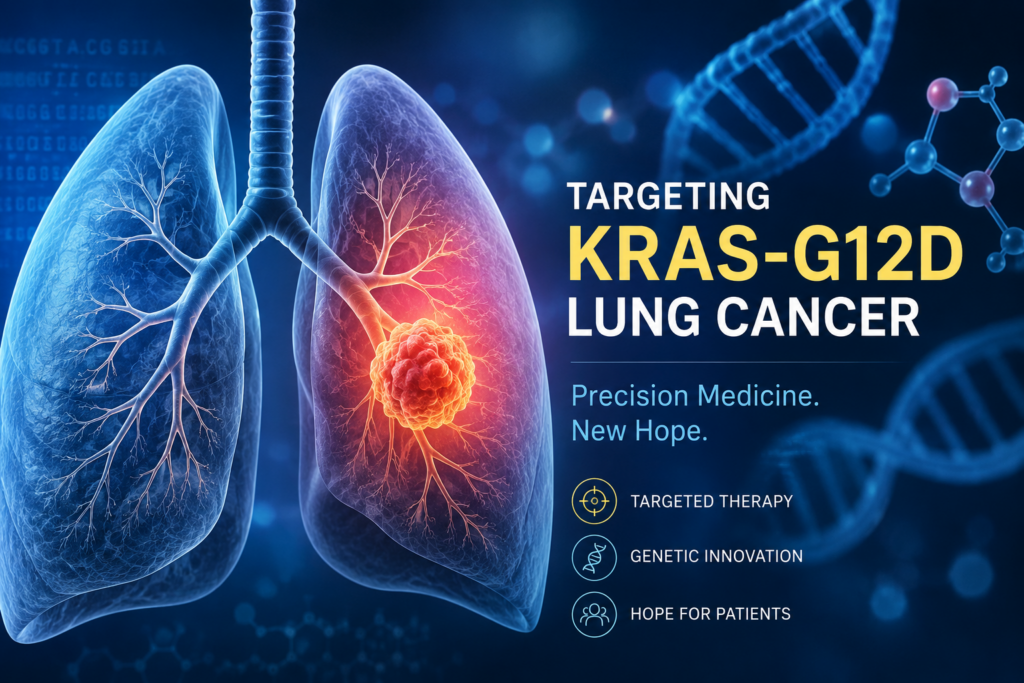
A New Option for KRAS Lung Cancer
Patients with KRAS-mutated lung cancer have long faced limited targeted treatment options — especially those with a mutation called KRAS-G12D. Now, new clinical trial results are offering hope for patients with advanced non-small cell lung cancer (NSCLC) whose cancer has continued to progress after standard treatment.
Researchers recently shared encouraging early findings about zoldonrasib (RMC-9805), an investigational targeted therapy designed specifically for KRAS-G12D lung cancer. The results, presented on April 27, 2026, at the American Association for Cancer Research (AACR) Annual Meeting, are generating excitement because KRAS-G12D has historically been one of the more difficult lung cancer mutations to target successfully.
What Is KRAS-G12D?
KRAS is a gene involved in cell growth and division. When a KRAS mutation occurs, cancer cells can grow uncontrollably. KRAS mutations are found in several cancers, including lung cancer, pancreatic cancer, and colorectal cancer.
Some patients may already be familiar with KRAS-G12C, another subtype that now has approved targeted therapies available. However, KRAS-G12D is different — and until now, there have been no approved targeted therapies specifically developed for it.
Although KRAS-G12D is found in only about 4% of non-small cell lung cancer cases, it can affect never smokers, younger adults, and patients who may not fit the “typical” lung cancer profile.
Encouraging Clinical Trial Results
In the ongoing Phase 1 clinical trial, researchers evaluated zoldonrasib in patients with advanced NSCLC whose cancer had already progressed after chemotherapy, immunotherapy, or both.
The early results were promising:
- 11 out of 18 patients experienced meaningful tumor shrinkage
- Researchers reported an overall response rate of approximately 61%
- Nearly 90% of patients achieved disease control, meaning their cancer either shrank or stabilized
These findings are especially important because second-line treatment options for KRAS-G12D metastatic lung cancer have historically shown much lower response rates.
One patient highlighted during the study presentation was a 36-year-old woman whose tumors reportedly shrank by 87% after joining the clinical trial when previous treatments stopped working.
While zoldonrasib is still investigational and not yet FDA-approved, many researchers believe these early findings represent an important step forward for KRAS-targeted therapy research and future lung cancer treatment options.
New targeted therapies continue to reshape the future of lung cancer treatment — and for patients with KRAS-G12D, this clinical trial may represent a meaningful step toward new hope.
FDA Grants Breakthrough Therapy Designation
In January 2026, the U.S. Food and Drug Administration (FDA) granted zoldonrasib “Breakthrough Therapy Designation” for previously treated KRAS-G12D metastatic NSCLC.
This designation may help accelerate the drug’s development and review process because it is intended for therapies showing strong potential in serious diseases with limited treatment options.
Why This Matters for Patients
This research highlights the growing importance of precision oncology and molecular testing in Stage 4 lung cancer. Comprehensive genetic testing can help identify mutations like KRAS, EGFR, ROS1, HER2, and ALK that may qualify patients for targeted therapies or clinical trials.
For many patients, clinical trials may provide access to promising new treatments years before they become widely available.
If you or a loved one has non-small cell lung cancer, it may be worth asking your oncology team:
- Has comprehensive molecular testing been completed?
- Does the tumor have a KRAS mutation?
- Are there KRAS-G12D clinical trials available?
- Would a second opinion at an NCI-designated cancer center help explore additional options?
You’re Not Alone—Connect with the Stage 4 Hope Community
Whether you’re exploring the latest cancer treatment advances like immunotherapy or targeted therapy, seeking emotional support, or trying to make sense of a new diagnosis, Stage 4 Hope is here for you. Join our community to access trusted resources, education, and encouragement from others who understand the stage 4 journey. At Stage4Hope, we encourage patients to explore clinical trials, genetic testing, and second opinions — especially when standard treatments are no longer working. We also help support patients traveling for cancer care through our Travel Expense Grants Program and provide emotional support through our Stage4Hope Retreat Programs for patients and caregivers navigating advanced cancer.
References:
