

When Access to Care Changes a Stage 4 Cancer Story
When Options Feel Like They’re Running Out
For Nisar Hussain Khan, a diagnosis of Stage 4 lung cancer came with devastating news—there were few treatment options left.
He had already spent nearly two months in the hospital. He had lost so much weight he needed a feeding tube. Even speaking was difficult because of a severe cough.
His daughter, Kay, remembers how quickly everything changed.
“We were told there wasn’t much more they could do,” she shared.
For many families facing advanced lung cancer, this is the moment when time feels like it’s slipping away.
But for some patients, clinical trials for lung cancer can offer access to advanced Stage 4 lung cancer treatment options that are not available elsewhere.
A Turning Point Through Clinical Trials
Everything changed when Nisar and his family sought care at Memorial Sloan Kettering Cancer Center.
There, they were offered something many patients never get the chance to explore—a clinical trial for Stage 4 lung cancer.
Led by Robert Daly and connected to research from Alexander Drilon, the trial focused on a targeted therapy designed to block cancer growth at the molecular level.
Within days of starting treatment, everything began to shift.
“Three days after taking the medication, I was able to talk and laugh again.”
“After a week, the terrible cough was nearly gone. I have regained over 20 pounds. I can even play ping-pong. It was a miracle.”
Living Again—Without Leaving Home
For Nisar and his family, one of the biggest concerns was the burden of travel.
Like many patients with Stage 4 lung cancer, getting to a major cancer center can be physically exhausting, emotionally overwhelming, and financially difficult.
But this clinical trial offered something different.
Through a more innovative approach, his care was coordinated remotely—allowing him to receive treatment close to home in Texas.
“It was such a huge relief for us,” Kay said. “He could stay in his own space and sleep in his own bed.”
This kind of access is changing what’s possible for patients seeking clinical trials for lung cancer.
Another Stage 4 Lung Cancer Story
Tengo Shautidze was facing a different form of aggressive lung cancer when he was offered an innovative immunotherapy treatment.
Traditionally, this type of Stage 4 lung cancer treatment requires hospitalization due to potential side effects.
But through a new “hospital at home” approach led by Dr. Daly, Tengo was able to receive treatment from his own home—with telehealth monitoring, in-home visits, and support.
“Getting medicine this way is much more convenient… it’s easier on you and your family.”
“It’s also better psychologically — you don’t feel as sick.”
For Tengo and his wife, this approach made a meaningful difference—not just physically, but emotionally.
“My husband feels so much better,” his wife shared. “And is doing so much better.”
Why These Stage 4 Lung Cancer Stories Matter
Nisar and Tengo’s experiences highlight something critical:
For patients with Stage 4 lung cancer, the right treatment—and the right access—can change everything.
Clinical trials for lung cancer are not just research. They provide access to:
- Advanced targeted therapies and immunotherapy
- New Stage 4 lung cancer treatment options
- Opportunities when standard treatments no longer work
Yet only a small percentage of patients ever participate in clinical trials.
The Reality: Access Is Still the Biggest Barrier
Many patients are not missing options—they are missing access.
Delays in referrals, lack of awareness about clinical trials for lung cancer, and the burden of travel prevent patients from reaching the care that could extend their lives.
For patients with Stage 4 cancer, time is everything.
How Stage4Hope Helps Patients Move Faster
At Stage4Hope, we are focused on one mission:
Helping patients with Stage 4 cancer access life-saving care—faster.
We help patients:
- Connect with leading cancer centers
- Explore targeted therapy and clinical trial options
- Navigate complex treatment decisions
- Access travel support when distance is a barrier
👉 Learn more about how we support patients: https://stage4hope.org
If you or a loved one has been diagnosed with Stage 4 cancer, getting to the right place quickly can make all the difference.
👉 Explore resources and patient support: https://stage4hope.org/resources
Healthcare providers and partners can also refer patients directly to help accelerate access to care:
👉 Check out our travel grants: https://stage4hope.org
References:
https://www.mskcc.org/news/msk-clinical-trials-bringing-promise-of-new-medicine-to-more-patients

A Stage 4 Lung Cancer Breakthrough Story
When a Stage 4 Diagnosis Changes Everything
When Joanne Ferrari-Mautino went in for an X-ray, she knew something wasn’t right.
“I’ve been a nurse for 20 years,” she said. “I knew it was not a good sign.”
What started as a persistent cough quickly turned into something far more serious. Within days, Joanne was told she had Stage 4 non-small cell lung cancer—and a life expectancy of just 18 months to two years.
In that moment, everything changed.
She had a teenage son. A partner. A life she loved in her small Connecticut town. And suddenly, she was facing a diagnosis that felt overwhelming and uncertain.
Finding Answers Through Biomarker Testing
But Joanne’s story didn’t end there.
Further testing revealed something critical—a genetic mutation known as a ROS1 fusion, a rare driver of lung cancer. That one piece of information changed everything about her treatment path.
She was referred to Memorial Sloan Kettering Cancer Center, where she met Alexander Drilon, a physician who specializes in ROS1 lung cancer treatment.
Instead of standard chemotherapy, Joanne was able to begin targeted therapy for Stage 4 lung cancer—a treatment designed specifically for the genetic mutation driving her cancer.
What followed felt, in her words, like a miracle.
“I live a normal life. Sometimes people don’t even know I have cancer.”
A Second Story of Strength
Joanne’s experience is not the only one.
Anthony Valente, 63, was also diagnosed with advanced lung cancer after tumors were discovered during a routine exam. Initial treatment worked for a time—but eventually, the cancer began to grow again.
At that point, he was offered something different: a clinical trial for a next-generation ROS1 targeted therapy.
After starting treatment, he saw rapid improvement.
“The cancer shrunk and shrunk and shrunk. I actually feel better now than before I had cancer.”
For Anthony, it wasn’t just the treatment that made a difference—it was also the support around him. His wife of 40 years stood beside him through every step, and the care team helped guide him through difficult decisions.
Why These Stories Matter
Joanne and Anthony’s stories highlight something incredibly important for patients with Stage 4 lung cancer:
The right treatment can change everything.
Advances in targeted therapy for lung cancer, including newer drugs like Repotrectinib, Taletrectinib, and Zidesamtinib, are helping patients live longer with fewer side effects.
But these treatments are only possible when patients:
- Receive biomarker testing
- Get connected to the right specialists
- Access leading cancer centers and clinical trials
And for many patients, that access is the biggest challenge.
The Reality Many Patients Face
Too often, patients are not missing options—they are missing access.
Delays in referrals, lack of awareness about ROS1 lung cancer treatment, and the burden of travel can prevent patients from reaching the care that could extend their lives.
Time matters—especially with advanced cancer.
How Stage4Hope Helps Patients Like Joanne and Anthony
At Stage4Hope, we are focused on one mission:
Helping patients with Stage 4 cancer access life-saving care—faster.
We help patients:
- Connect with leading cancer centers
- Explore targeted therapy and clinical trial options
- Navigate complex treatment decisions
- Access travel support when distance is a barrier
👉 Learn more about how we support patients: https://stage4hope.org
If you or a loved one has been diagnosed with Stage 4 lung cancer, especially with a known mutation like ROS1, getting to the right place quickly can make all the difference.
👉 Explore resources and patient support: https://stage4hope.org/resources
Healthcare providers and partners can refer patients directly to Stage4Hope for travel assistance grants, helping reduce the financial burden of traveling for treatment or a second opinion.
👉 Refer a patient or partner with us: https://stage4hope.org
References:

Clinical Trial Hope for ROS1 Lung Cancer
Why ROS1 Patients Should Be Watching Zidesamtinib
For people living with ROS1-positive non-small cell lung cancer, Zidesamtinib is one of the most important new developments to watch. It is being studied in the ARROS-1 clinical trial, and public trial listings show Memorial Sloan Kettering Cancer Center and Emory Winship Cancer Institute as active sites.
This matters because clinical trials should not be treated as a last resort for ROS1 patients. In some cases, a trial may be worth discussing earlier, especially when side effects, quality of life, or long term planning are already becoming part of the treatment decision. ARROS-1 includes multiple patient groups, including some who are TKI-naïve (not previously treated with a ROS1 targeted drug), which reinforces that this is not only a trial for people who have run out of standard options.
Zidesamtinib for ROS1 Lung Cancer: New Trial Hope
What Is Zidesamtinib?
Zidesamtinib is a targeted medicine being studied for cancers driven by a ROS1 fusion, a specific gene change that can fuel cancer growth. It was designed to help address some of the hardest problems ROS1 patients face, including when earlier targeted drugs stop working and when cancer spreads to the brain. Public company materials also describe activity against certain ROS1 resistance mutations, including G2032R.
Zidesamtinib is not yet FDA approved, but it is moving through FDA review after encouraging trial results. Nuvalent has announced that the FDA accepted its New Drug Application for priority review, with a target action date of September 18, 2026.
Why Is It Getting So Much Attention?
Zidesamtinib has received FDA Breakthrough Therapy Designation for patients with ROS1-positive metastatic non-small cell lung cancer who have already been treated with 2 or more ROS1 targeted drugs. That does not mean the drug is already approved, but it does reflect the significance of the early data and can help speed development and review.
Early public results from ARROS-1 have also been encouraging in previously treated ROS1-positive lung cancer, including reported responses, durable benefit in many responders, and activity in patients with brain metastases and certain resistance mutations. These are still results from an ongoing study, but they are one reason many ROS1 patients and doctors are watching zidesamtinib closely.
Who Should Ask About This Trial?
ARROS-1 is not limited to one narrow patient group. According to the public trial listing, the Phase 2 portion includes patients who are TKI-naive, patients who have had 1 prior ROS1 inhibitor, patients who have had 1 prior ROS1 inhibitor plus platinum chemotherapy, patients who have had 2 or more prior ROS1 inhibitors, and a separate cohort for other advanced solid tumors with a ROS1 rearrangement.
That means this trial may be worth asking about in more than one situation. If you are newly diagnosed and TKI-naive, it may be worth discussing. If your current ROS1 treatment is still controlling your cancer but the side effects are significantly hurting your quality of life, it may also be worth discussing. For ROS1 patients, the right time to talk about a trial is not always after progression. Sometimes it is earlier, while there is still time to make a thoughtful decision.
Where Is It Available?
The main study is ARROS-1, an active Phase 1/2 trial listed by the National Cancer Institute. Public listings show both MSK and Winship as active locations.
MSK also lists a separate expanded access pathway for zidesamtinib for certain adults with advanced ROS1-positive cancers whose disease is still growing after treatment. That means some patients may have more than one path to ask about, depending on their situation and eligibility.
Why This Matters for ROS1 Patients
For ROS1-positive lung cancer, this is a real step forward.
The treatment landscape is still moving. New options are still being developed. Clinical trials may offer access to promising therapies earlier than many patients realize. That is why trial review should be part of the conversation for ROS1 patients, especially at leading cancer centers that see these cases often and understand the evolving science.
Too often, patients hear about trials only when they are running out of options. That is too late for some people. For ROS1 patients, the better question is not only, “What do I do after this stops working?” It is also, “Should I already be exploring what comes next?”
What To Do Next
If you or someone you love has ROS1-positive lung cancer, now is a good time to ask:
- Has full molecular testing been done and reviewed recently?
- Is my current treatment still the best fit for both cancer control and quality of life?
- Should a leading cancer center review my case now?
- Should a ROS1 clinical trial be part of my plan now, not later?
- Is ARROS-1 or another trial worth discussing?
At Stage4Hope, we help patients move faster toward leading cancer centers, clinical trial opportunities, and practical support. If distance is part of the challenge, our Travel Expense Grants may also help.
Have ROS1-positive lung cancer? Ask us about expert care, clinical trial options, and travel support.
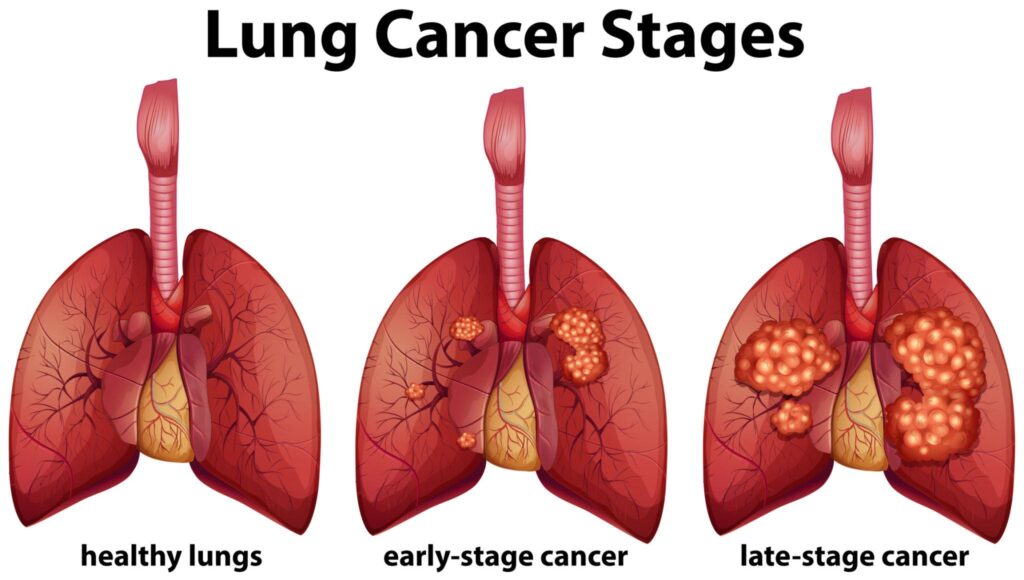
What Is Advanced Stage Lung Cancer?
Understanding Lung Cancer Staging and What It Means
A diagnosis of lung cancer can feel overwhelming—especially when you hear the words advanced stage. But understanding what “advanced stage lung cancer” actually means can help you make informed decisions, ask better questions, and feel more prepared for what lies ahead.
At Stage4Hope, we believe knowledge brings clarity—and clarity brings strength.
What Is Lung Cancer?
Lung cancer begins when abnormal cells grow uncontrollably in the lungs. There are two primary types:
- Non-Small Cell Lung Cancer (NSCLC) – The most common type (about 80–85% of cases)
- Small Cell Lung Cancer (SCLC) – A more aggressive, fast-growing form
Doctors determine how advanced lung cancer is by assigning it a stage. Staging helps guide treatment decisions and gives insight into how far the cancer has spread.
How Lung Cancer Is Staged
Lung cancer is staged using the TNM system, which looks at:
- T (Tumor): Size and location of the main tumor
- N (Nodes): Whether nearby lymph nodes are involved
- M (Metastasis): Whether cancer has spread to distant organs
Stages range from Stage 0 to Stage IV (4).
Lung Cancer Stages Explained
Stage 0 (Carcinoma in Situ)
- Cancer cells are only in the lining of the lung
- No invasion into deeper tissue
- Highly treatable when detected
Stage I
- Cancer is confined to the lung
- No spread to lymph nodes
- Often treated with surgery and possibly chemotherapy
Stage II
- Cancer may have spread to nearby lymph nodes
- Tumor may be larger or invading nearby structures
- Treatment often includes surgery plus chemotherapy
Stage III
- Cancer has spread to lymph nodes in the center of the chest (mediastinum)
- May involve nearby organs or tissues
- Typically treated with a combination of chemotherapy, radiation, targeted therapy, or immunotherapy
Stage III is sometimes referred to as locally advanced lung cancer.
Stage IV (Advanced Stage Lung Cancer)
Stage IV lung cancer is considered advanced stage.
At this stage:
- Cancer has spread (metastasized) beyond the lungs
- Common sites include the brain, bones, liver, or adrenal glands
- It may involve fluid buildup around the lungs (malignant pleural effusion)
Stage IV is further divided into:
- Stage IVA: Cancer has spread within the chest or to one distant organ
- Stage IVB: Cancer has spread to multiple distant organs
While Stage IV is serious, treatment options have advanced significantly in recent years—especially with targeted therapies, immunotherapy, and precision oncology.
What Does “Advanced Stage Lung Cancer” Mean?
“Advanced stage lung cancer” usually refers to:
- Stage III (locally advanced)
- Stage IV (metastatic lung cancer)
It means the cancer has spread beyond its original location and requires comprehensive treatment rather than surgery alone.
However, advanced does not mean untreatable. Many patients live meaningful, extended lives with new treatment breakthroughs, clinical trials, and personalized medicine.
Treatment Options for Advanced Stage Lung Cancer
Treatment depends on cancer type, genetic mutations, overall health, and personal goals. Options may include:
- Targeted therapy (for specific gene mutations like EGFR, ALK, ROS1, RET, KRAS)
- Immunotherapy
- Chemotherapy
- Radiation therapy
- Clinical trials
- Palliative and supportive care
Genetic testing plays a crucial role in advanced lung cancer treatment, helping match patients with therapies designed specifically for their cancer’s biology.
Living With Advanced Lung Cancer
An advanced stage diagnosis affects more than the body—it impacts emotional health, relationships, finances, and daily life.
Patients often face:
- Travel costs for specialized care
- Access barriers to clinical trials
- Emotional strain
- Financial burdens
That’s where support becomes essential.
You Are Not Alone
At Stage4Hope, we exist to improve the lives of advanced-stage cancer patients by:
- Accelerating access to specialized treatments and clinical trials
- Funding cutting-edge precision oncology research
- Providing financial support for treatment-related travel
- Offering free virtual cancer support groups
- Hosting expert-led training and retreats
Whether you’ve just received a diagnosis or have been navigating advanced lung cancer for years, there is strength in community and hope in innovation.
Stay Connected with Stage4Hope
Learn more about advanced-stage lung cancer, treatment breakthroughs, how treatment timing may matter, and living well with Stage 4 cancer. Join our community to receive updates on research, virtual support groups, retreats, and training opportunities designed specifically for those facing late-stage diagnoses.
You don’t have to walk this journey alone.
Discover our world-class care partnerships for patients with late-diagnosis cancer.

Does Treatment Timing Matter in Lung Cancer?
Does Immunotherapy Treatment Timing Matter in Lung Cancer?
Could Timing Give Your Cancer Treatment a Boost?
A new clinical trial is sparking real conversation in the lung cancer community by asking a surprisingly simple question: Does the time of day you receive treatment affect how well it works? For people living with advanced non-small cell lung cancer (NSCLC), this research offers a hopeful — and low-cost — idea that could one day improve outcomes without changing the drugs themselves.
Morning vs. Afternoon Immunotherapy for Lung Cancer
In a randomized clinical trial, researchers found that patients who received immunochemotherapy earlier in the day lived longer and had better control of their cancer compared to those treated later in the afternoon. Immunochemotherapy is a combination of immunotherapy (which helps your immune system recognize and attack cancer) and chemotherapy (which directly kills cancer cells). Patients treated earlier had a 60% lower risk of cancer progression and a 48% lower risk of early death.
What the Study Found — In Plain Language
The phase 3 LungTIME-C01 trial followed 210 people with advanced (stage IIIC or stage 4) non-small cell lung cancer who did not have known genetic driver mutations. Everyone received the same drugs — the only difference was when treatment was given:
-
Early group: Treatment before 3:00 PM
-
Late group: Treatment after 3:00 PM
After more than two years of follow-up, the differences were striking:
-
Cancer stayed under control for about 11 months in the early-day group
-
Cancer worsened in about 6 months for those treated later
-
Overall survival was 28 months vs. 16.8 months, favoring earlier treatment
Researchers believe this benefit may be tied to the body’s circadian rhythm — the natural 24-hour cycle that regulates hormones, immune activity, and cell behavior.
Why the Immune System’s “Clock” Matters
Your immune system doesn’t work the same way all day long. Certain immune cells — especially CD8+ T cells, often called “killer” T cells — appear to be more active and effective earlier in the day.
In this study, patients treated in the morning had:
-
More circulating CD8+ T cells
-
A healthier balance of activated (ready to fight cancer) vs. exhausted immune cells
This may explain why immunotherapy worked better earlier in the day — the immune system was simply more prepared to respond.
Should Patients Change Their Treatment Time Now?
Not yet — and that’s important to say clearly.
While many experts find the results exciting, others urge caution. This is the first randomized trial to confirm what earlier observational studies only suggested. Larger studies and reviews of past trials are still needed before treatment timing becomes part of standard care.
That said, this approach is especially intriguing because:
-
It doesn’t add new drugs
-
It doesn’t increase toxicity
-
It could be easier to implement than many medical advances
Some researchers believe timing may matter most during the first cycle of immunotherapy, when the immune system is being “trained” to recognize cancer.
What This Means for Patients Today
If you’re receiving or considering immunochemotherapy:
-
Timing is not part of standard treatment guidelines yet
-
This study is promising, but still early
-
It may be worth asking your oncologist whether infusion timing is flexible — especially at the start of treatment
As always, treatment decisions should be personalized, balancing science, logistics, and what’s realistic for you.
At Stage4Hope, we believe progress often comes from unexpected places — and sometimes, hope comes from asking new questions about familiar treatments. We’ll continue to follow this research closely and share updates as more data becomes available.
Questions to Ask Your Doctor
-
Does treatment timing matter for my specific cancer?
-
Is morning treatment an option for me?
-
How does immunotherapy work with my immune system?
-
What side effects should I watch for?
Stay Connected with Stage 4 Hope

AI in Lung Cancer Treatment
How AI Is Improving Lung Cancer Treatment: New Tools, Real Impact
See how AI is helping guide immunotherapy decisions, combine imaging for deeper insights, and support earlier detection—bringing more personalized lung cancer care.
Three Ways AI Is Moving Lung Cancer Care Forward
1) AI that predicts immunotherapy response in advanced NSCLC (Deep-IO)
A validated deep-learning model called Deep-IO may help doctors better predict which patients with advanced non-small cell lung cancer (NSCLC) will respond to immunotherapy—using routine pathology slides from tumor biopsies. In the study discussed in a Physician’s Weekly Q&A, researchers trained the model on hundreds of thousands of image “tiles” from 958 patients (US + EU cohorts, 2014–2022). The model showed meaningful accuracy for predicting response (reported AUCs varied by cohort) and, importantly, it may help identify non-responders more specifically—potentially sparing patients ineffective treatment and side effects. The article also notes that combining Deep-IO + PD-L1 performed better than either marker alone in that validation setting.1
2) “Connecting the dots” across cancer images (Emory)
A separate Emory report highlights how AI is being used to combine different kinds of cancer images—from microscopic tissue slides to CT scans and even epigenetic data—so researchers can build a more complete picture of how a tumor behaves. In four studies (focused on head and neck cancers), one team used an AI platform called VISTA to transform standard H&E slides into “virtual IHC” to help identify tumor-associated macrophages that are otherwise difficult to see. Another approach adapted a swin transformer into a multimodal framework (called SMuRF) that helped integrate 2D pathology images with 3D radiology, supporting predictions about survival and even which patients might benefit from chemotherapy. A fourth effort linked slide images with epigenetic patterns using pathogenomic fingerprinting, aiming to improve risk assessment. Emory’s researchers also emphasize the need to be cautious and thoughtful before moving these tools fully into clinical practice.2
3) What this means for lung cancer patients right now
Together, these developments point to a near-future where AI can support:
- More personalized treatment selection (who is most likely to benefit from immunotherapy)3
- Smarter risk and prognosis tools by combining radiology + pathology + other data4
- Earlier detection and faster pathways to care, especially as imaging AI expands in real-world settings5
It’s also important to keep the balance: experts continue to flag challenges like bias and fairness, the need for diverse multi-site datasets, and careful clinical validation before widespread adoption.6
More examples of AI in cancer research and care
- NCI’s HistoTME model (NSCLC + immunotherapy): An NCI team described HistoTME, which analyzes digital pathology images to learn about the tumor microenvironment and improve prediction of immunotherapy response—supporting biomarker discovery and more personalized immunotherapy strategies.7
- AI-driven early lung cancer detection (Bristol Myers + Microsoft, Jan 20, 2026): Reuters reports a collaboration using FDA-cleared radiology AI algorithms through Microsoft’s Precision Imaging Network to help clinicians detect lung nodules earlier and expand access in underserved communities.8
- AI + breast cancer screening at scale (EDITH trial, UK): A UK government announcement describes a large NHS trial (~700,000 participants) evaluating AI to support mammogram reading and potentially reduce the need for a second specialist reader.9
- Multimodal AI for recurrence risk (AACR, Dec 10, 2025): AACR describes an AI model combining digitized pathology slides with molecular + clinical data to improve long-term recurrence risk stratification in early breast cancer.10
- AI to speed oncology drug research (AstraZeneca + Modella AI, Jan 13, 2026): Reuters reports AstraZeneca agreed to acquire Modella AI to boost quantitative pathology and biomarker discovery for oncology R&D.11
AI is a supportive tool
AI isn’t replacing oncologists—it’s becoming a powerful support tool that can help doctors see patterns humans can’t easily spot, match patients to therapies more precisely, and potentially reduce trial-and-error in treatment. If you or someone you love is living with lung cancer, it may be worth asking your care team about biomarker testing (like PD-L1), available clinical trials, and how new imaging or pathology tools are shaping treatment decisions.12
Resources for Living With Stage 4 Cancer
Whether you’re navigating treatment options, seeking emotional support, or trying to make sense of a new diagnosis, Stage 4 Hope is here for you. Become a member of our community to gain access to trusted resources, as well as online support and more.
References:
- https://www.physiciansweekly.com/post/qa-validated-ai-model-could-guide-real-world-nsclc-decisions
- https://news.emory.edu/stories/2025/06/hs_head_and_neck_16-06-2025/story.html
- https://www.physiciansweekly.com/post/qa-validated-ai-model-could-guide-real-world-nsclc-decisions
- https://news.emory.edu/stories/2025/06/hs_head_and_neck_16-06-2025/story.html
- https://www.reuters.com/business/healthcare-pharmaceuticals/bristol-myers-partners-with-microsoft-ai-driven-lung-cancer-detection-2026-01-20/
- https://www.cancer.gov/about-nci/organization/cbiit/news-events/news/2025/artificial-intelligence-ai-model-histotme-aids-predicting-response-immunotherapy
- https://www.reuters.com/business/healthcare-pharmaceuticals/bristol-myers-partners-with-microsoft-ai-driven-lung-cancer-detection-2026-01-20/
- https://www.gov.uk/government/news/world-leading-ai-trial-to-tackle-breast-cancer-launched
- https://www.aacr.org/about-the-aacr/newsroom/news-releases/a-multimodal-ai-model-may-improve-recurrence-risk-stratification-in-early-breast-cancer/
- https://www.reuters.com/business/healthcare-pharmaceuticals/bristol-myers-partners-with-microsoft-ai-driven-lung-cancer-detection-2026-01-20/
- https://www.physiciansweekly.com/post/qa-validated-ai-model-could-guide-real-world-nsclc-decisions

Given 2 Years, Living 13 Strong
Living 13 Years Strong: Debbie’s Stage 4 Lung Cancer Journey of Hope and Persistence
Debbie was given two years after a stage 4 lung cancer diagnosis. Thirteen years later, she’s thriving—proof that hope and targeted therapy can change lives on a stage 4 lung cancer journey.
When Debbie was first diagnosed with stage 4 lung cancer, doctors told her she might only have one to two years left. Like many patients, she felt overwhelmed and afraid. But instead of giving up, she sought a second opinion and learned that her cancer carried the BRAF mutation. This discovery opened the door to targeted therapy through a clinical trial—something that gave her options beyond traditional chemotherapy and radiation.
Over the last 13 years, Debbie has faced many treatments, side effects, and setbacks, but also many breaks from therapy where she could live life more fully. She has outlived the predictions and now encourages other patients to stay hopeful, ask questions, and keep pushing for answers. Debbie’s story shows how advances in biomarker testing and targeted therapy can turn what once felt like an “end date” into years filled with milestones and new memories.
Her journey reminds us that no one is defined by statistics. For patients with advanced lung cancer, Debbie is living proof that hope, persistence, and medical progress can lead to more time and better quality of life. (Source: GO2 for Lung Cancer)
Read the complete article here >
You’re Not Alone—Connect with the Stage 4 Hope Community
Whether you’re navigating treatment options, seeking emotional support, or trying to make sense of a new diagnosis, Stage 4 Hope is here for you. Learn more about stage 4 lung cancer and other aspects of living with late-stage cancer. Join our community to connect with others who understand your experience and gain access to resources, events, medical updates, and invitations to supportive virtual events.

Hiking Through Stage 4 Cancer
Hiking Through Stage 4 Lung Cancer: Gerri’s Story of Strength and Hope
When Gerri was first told she had stage 4 lung cancer with an EGFR mutation, it felt like her world had flipped upside down. An active athlete and tennis pro, she never expected such a diagnosis. But instead of giving in to fear, she chose a path of strength and hope—continuing to hike, kayak, ski, and travel the world with her husband by her side. Just weeks after starting targeted therapy, she hiked 90 miles in Patagonia, a trip she once thought might never happen.
With the support of her family, her oncologist, and a caring social worker, Gerri has embraced both treatment and life’s adventures. She quilts for others, practices qigong, and continues to cross items off her bucket list—now on her second one. For her, lung cancer is only part of the story, not the definition of who she is. Her message to others is clear: keep moving, keep dreaming, and make plans for joy. “Control what you can,” she says, “and live fully with what you’ve been given.”
(Source: Gerri Allen, Lung Cancer Survivor Blog)
Read the complete article here >
Stay Connected with Stage 4 Hope
Hear more stories like Gerri’s—her journey hiking through stage 4 lung cancer—and other late-stage lung cancer stories from people living with cancer. Discover information on treatments, clinical trials, symptom management, and real stories from others on the same journey. Join our community to stay informed with the latest research updates, upcoming retreats, and educational events.

Living Fully: Joanne’s Cancer Journey
Living Fully with Non-Small Cell Lung Cancer: Joanne’s Story of Hope and Healing
When Joanne was diagnosed with non-small cell lung cancer in 2021, she couldn’t help but ask the same question many patients face: “Why me?” She had lived a healthy lifestyle, exercised, and avoided processed foods, yet found herself retracing her past for answers—secondhand smoke in childhood, brief years of social smoking, exposure to environmental toxins, stress, or perhaps random chance. Her pathology revealed an EGFR mutation, a genetic change often seen in people with little or no smoking history, which allowed her to begin targeted therapy after surgery and chemotherapy.
Over time, Joanne realized that focusing on blame only robs her of peace. Instead, she has chosen to center her life around gratitude, faith, and the love of her husband and community. With new advances in treatment, she believes lung cancer should no longer be viewed as an automatic death sentence or a punishment tied to smoking. Through sharing her story, Joanne hopes to break the stigma, reminding us that compassion and understanding—not judgment—are what every patient deserves. (Source: Joanne Gaget Blog)
Read the complete article here >
Stay Connected with Stage 4 Hope
Hear more stories like Joanne’s story of hope and healing after she was diagnosed with non-small cell lung cancer in 2021—and other late-stage lung cancer stories from people living with cancer. Discover information on treatments, clinical trials, symptom management, and real stories from others on the same journey. Join our community to stay informed with the latest research updates, upcoming retreats, and educational events.

Riding Through Cancer: Christy’s Story
Riding My Harley Through Cancer: Christy’s Stage 4 Lung Cancer Story
From riding her Harley to competing in strongman events, Christy’s journey shows how hope and targeted therapy can make life after diagnosis possible.
When Christy Erickson was diagnosed with stage IV lung cancer at just 41, she feared she wouldn’t see her children grow up. After months of unanswered questions and second opinions, genetic testing showed her tumor had an EGFR mutation. That result opened the door to a targeted therapy called osimertinib. The treatment gave her more time with her family and the chance to live fully, not just survive.
A Turning Point: Genetic Testing and Targeted Therapy
Genetic testing revealed that Christy Erickson’s lung cancer carried an EGFR mutation, making her eligible for osimertinib—a targeted therapy supported by years of clinical research. Although she wasn’t enrolled in the pivotal trial, she directly benefited from the breakthroughs that helped make the treatment widely available. Osimertinib (brand name Tagrisso) is an oral targeted therapy (an EGFR inhibitor) used for certain types of non-small cell lung cancer (NSCLC) with EGFR mutations (such as exon 19 deletions or L858R). It works by blocking overactive epidermal growth factor receptors (EGFR), which can help slow or stop cancer cell growth; common side effects may include diarrhea, skin changes, and low blood counts.
(Source: Winship Cancer Institute of Emory University)
Read the complete article here >
Stay Connected with Stage 4 Hope
Hear more stories like Christy’s—riding her Harley after being diagnosed with stage IV lung cancer at just 41, daring to dream and continuing to live on her terms—and other late-stage lung cancer stories from people living with cancer. Discover information on treatments, clinical trials, symptom management, and real stories from others on the same journey. Join our community to stay informed with the latest research updates, upcoming retreats, and educational events.
References:
1. https://www.cancerresearchuk.org/about-cancer/treatment/drugs/osimertinib

Karen’s Fight, Eight Years and Counting
From Remission to Recurrence: Karen’s Stage 4 Lung Cancer Journey
Karen’s lung cancer returned after eight clear years. Now living with stage 4 lung cancer, she shares how research advances and new treatments are giving patients more time and hope.
When Karen was first diagnosed with lung cancer at age 47, it came as a complete shock. A healthy, never-smoker with no family history, she suddenly found herself facing surgery to remove part of her lung and rounds of chemotherapy. For eight years her scans were clear, until the cancer returned in her ribs. Now living with stage 4 lung cancer, she is facing this new challenge with the same determination she had at the very beginning.
What gives Karen strength is the progress that’s been made in lung cancer research. Eight years ago, her mutation wasn’t even identifiable. Today, doctors not only know what it is, but there are already FDA-approved treatments available. Karen continues to live life fully—biking, traveling, taking classes—and believes every patient deserves to feel this hopeful. Her story is a powerful reminder that advances in treatment are giving people more options, more time, and more hope than ever before. (Source: Karen V. Blog)
Read the complete article here >
You’re Not Alone—Connect with the Stage 4 Hope Community
Whether you’re navigating treatment options, seeking emotional support, or trying to make sense of a new diagnosis, Stage 4 Hope is here for you. Read more stage 4 lung cancer stories and other aspects of living with late-stage cancer. Join our community and gain access to resources, events, medical updates, and invitations to supportive virtual events.

Stage 4 Lung Cancer Veteran Speaks Out to Save Others
Stage 4 Lung Cancer Veteran: Xavier Sanders Fights for Awareness
Xavier Sanders spent 14 years proudly serving in the U.S. Air Force. But in 2022, his life changed when doctors discovered stage 4 lung cancer—despite never smoking. The cancer had already spread to his liver and brain. Now, Xavier is using his voice to speak out about the urgent need for earlier detection, better support, and more awareness—especially for service members exposed to burn pits and toxic chemicals during deployment.
He’s not just fighting for himself. Xavier is advocating for younger airmen who may not know what symptoms to watch for or how to get the right care. His wife, Chelsea, has become his strongest advocate—reminding others that “mental toughness” can sometimes hide real suffering. Together, they’re pushing for change in how military members with cancer are seen, heard, and supported.
Now a passionate advocate, Xavier is using his story and his brand, to inspire others to fight with authenticity, courage, and hope. “Every day is a new day to fight,” he says. “We can’t afford to stay quiet.” (Source: Xavier’s Story, March 2024)
Read the complete article here >
You’re Not Alone—Connect with the Stage 4 Hope Community
Read more stage 4 lung cancer veteran stories, early detection and lung cancer in non-smokers.
Join our community to access resources, events, medical updates, and invitations to supportive virtual events.
